

Hair loss is one of the most common concerns affecting both men and women worldwide. While losing some hair each day is normal, excessive hair shedding can be alarming and often indicates underlying issues related to scalp health, nutrition, hormones, or lifestyle habits.
On average, people lose 50–100 strands of hair per day as part of the natural hair growth cycle. However, when the balance between hair shedding and new hair growth is disrupted, noticeable thinning or hair loss can occur.

The good news is that many cases of hair loss can be improved or even reversed naturally by addressing the root causes and following a consistent hair care routine.
In this comprehensive guide, you will learn:
- The most common causes of hair loss
- Natural remedies that help stop hair fall
- Lifestyle habits that support hair growth
- A simple routine to strengthen hair naturally
Understanding the Hair Growth Cycle
Before learning how to stop hair loss naturally, it is important to understand how hair grows.
Hair follicles follow a cycle with three main stages:
Anagen Phase (Growth Phase)
This phase lasts 2–7 years and determines how long hair can grow.
Catagen Phase (Transition Phase)
A short phase lasting about 2 weeks, where the hair follicle shrinks.
Telogen Phase (Resting Phase)
This stage lasts 3 months, after which the hair naturally falls out and a new hair strand begins growing.
Hair loss occurs when more follicles enter the telogen phase prematurely, resulting in increased shedding.
Common Causes of Hair Loss
Hair loss rarely happens without a reason. Identifying the underlying cause is the first step toward effective treatment.
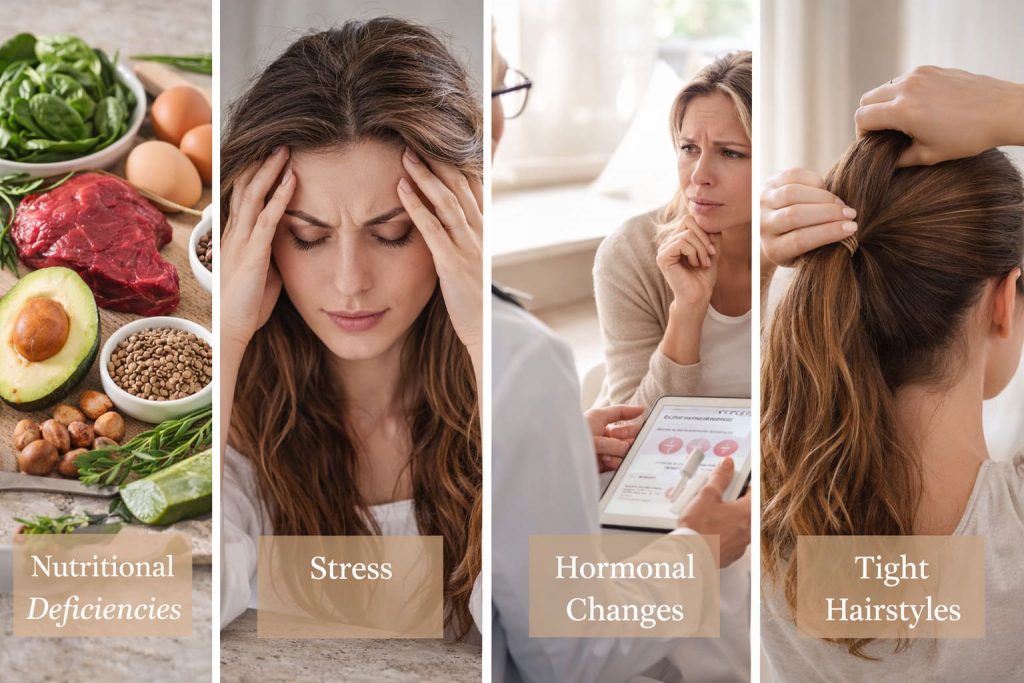
1. Nutritional Deficiencies
Hair follicles require nutrients to grow properly. Deficiencies in the following nutrients can contribute to hair loss:
- iron
- protein
- vitamin D
- zinc
- biotin
Low iron levels, in particular, are a common cause of hair thinning in women.
2. Stress
Physical or emotional stress can trigger a condition called telogen effluvium, where large numbers of hair follicles enter the shedding phase.
Stress-related hair loss typically occurs 2–3 months after a stressful event.
3. Hormonal Changes
Hormonal fluctuations may contribute to hair loss in situations such as:
- pregnancy
- menopause
- thyroid disorders
- polycystic ovary syndrome (PCOS)
4. Tight Hairstyles
Constant pulling from tight ponytails, braids, or buns can damage hair follicles, causing a type of hair loss known as traction alopecia.
5. Harsh Hair Treatments
Frequent exposure to chemical treatments, excessive heat styling, and aggressive brushing can weaken the hair shaft and lead to breakage.
Natural Ways to Stop Hair Loss
Below are some of the most effective natural strategies for reducing hair fall and improving hair strength.

1. Improve Your Diet for Hair Health
Healthy hair starts from within.
A balanced diet rich in essential nutrients helps strengthen hair follicles and supports natural hair growth.
Best foods for preventing hair loss
Protein-rich foods
- eggs
- fish
- lean meat
- legumes
Iron-rich foods
- spinach
- lentils
- pumpkin seeds
Healthy fats
- avocados
- nuts
- olive oil
Hair follicles depend heavily on protein, since hair strands are composed mainly of keratin, a structural protein.
2. Massage the Scalp Regularly
Scalp massage is one of the simplest natural treatments for hair loss.
Benefits include:
- improved blood circulation
- increased oxygen supply to hair follicles
- stronger hair roots
How to perform a scalp massage
- Use your fingertips
- Apply gentle pressure
- Massage in circular motions
- Continue for 5–10 minutes daily
Adding natural oils during the massage can enhance the benefits.
3. Use Natural Oils for Hair Strength
Certain natural oils are known to nourish the scalp and strengthen hair.
Coconut Oil
Helps reduce protein loss in hair strands.
Castor Oil
Rich in ricinoleic acid, which supports scalp circulation.
Rosemary Oil
May stimulate hair follicles and improve hair density.
Argan Oil
Contains antioxidants that nourish hair and improve elasticity.
Apply oil to the scalp 2–3 times per week for best results.
4. Reduce Heat Styling
Heat tools weaken the hair shaft and increase breakage.
Common damaging tools include:
- straighteners
- curling irons
- blow dryers
Limiting heat styling allows hair to maintain its natural strength.
5. Use Gentle Hair Care Products
Harsh shampoos and styling products can damage hair and irritate the scalp.
Avoid products that contain:
- sulfates
- parabens
- excessive alcohol
Instead, choose mild formulas designed to support scalp health.
6. Manage Stress Levels
Stress can disrupt the hair growth cycle.
Practices that help manage stress include:
- meditation
- deep breathing
- yoga
- regular exercise
Adequate sleep is also essential for maintaining hormonal balance.
7. Try Aloe Vera for Scalp Health
Aloe vera is a natural remedy often used to soothe scalp irritation.
Benefits include:
- reducing dandruff
- calming inflammation
- improving scalp hydration
Apply fresh aloe gel to the scalp for 30 minutes before washing your hair.
8. Avoid Tight Hairstyles
Hairstyles that pull on the roots can weaken hair follicles.
Examples include:
- tight ponytails
- braids
- buns
Switching to looser styles helps prevent traction-related hair loss.
9. Use Natural Hair Masks
Hair masks provide deep nourishment that strengthens hair strands.
Popular ingredients include:
- eggs
- yogurt
- avocado
- honey
Apply a hair mask once per week to maintain healthy hair.
10. Keep the Scalp Clean
Product buildup and excess oil can clog hair follicles and weaken hair growth.
Use a gentle shampoo 2–3 times per week to maintain a clean scalp.
11. Stay Hydrated
Water plays an important role in maintaining hair elasticity.
Dehydration can lead to brittle hair that breaks easily.
Aim for 6–8 glasses of water daily.
12. Trim Hair Regularly
Split ends can travel up the hair shaft and cause further damage.
Trimming every 8–10 weeks helps maintain healthy hair.
13. Protect Hair While Sleeping
Nighttime friction can damage hair strands.
Protect your hair by:
- using silk pillowcases
- braiding hair loosely before sleep
- wearing a silk hair wrap
14. Improve Scalp Health
A healthy scalp provides the foundation for healthy hair growth.
Common scalp issues that contribute to hair loss include:
- dandruff
- inflammation
- dryness
- buildup
Regular scalp care helps keep follicles functioning properly.
15. Be Consistent with Your Hair Care Routine
Consistency is the key to improving hair health.
A balanced routine should include:
Daily habits
- gentle brushing
- avoiding tight hairstyles
- eating nutritious foods
Weekly habits
- oil massage
- deep conditioning
- scalp treatments
Most people begin noticing improvements within 3–6 months of consistent care.
Example Weekly Routine to Reduce Hair Loss
Daily
- eat nutrient-rich foods
- brush hair gently
- manage stress
2–3 Times Per Week
- wash hair with gentle shampoo
- apply natural oils to the scalp
Once Per Week
- deep conditioning hair mask
- scalp treatment
Expert Advice from Dr. Natalie Harper
In my experience working with patients over the past two decades, many people assume hair loss is permanent. In reality, most cases of hair thinning are caused by lifestyle factors that can be improved naturally.
By focusing on scalp health, balanced nutrition, and gentle hair care practices, it is possible to restore stronger and healthier hair over time.
Frequently Asked Questions
Is it possible to stop hair loss naturally?
Yes. Many cases of hair loss can be improved by correcting nutritional deficiencies, reducing stress, and maintaining healthy hair care habits.
How long does it take to see results?
Hair growth takes time. Most people notice improvement within 3–4 months.
What vitamins help reduce hair loss?
Important nutrients include:
- biotin
- vitamin D
- iron
- zinc
- omega-3 fatty acids
Final Thoughts
Hair loss can be frustrating, but it is often reversible when the underlying causes are addressed.
By adopting a healthy lifestyle and following natural hair care practices, you can strengthen hair follicles, reduce shedding, and encourage healthier hair growth.
Patience and consistency are the most important factors in achieving lasting results.
